
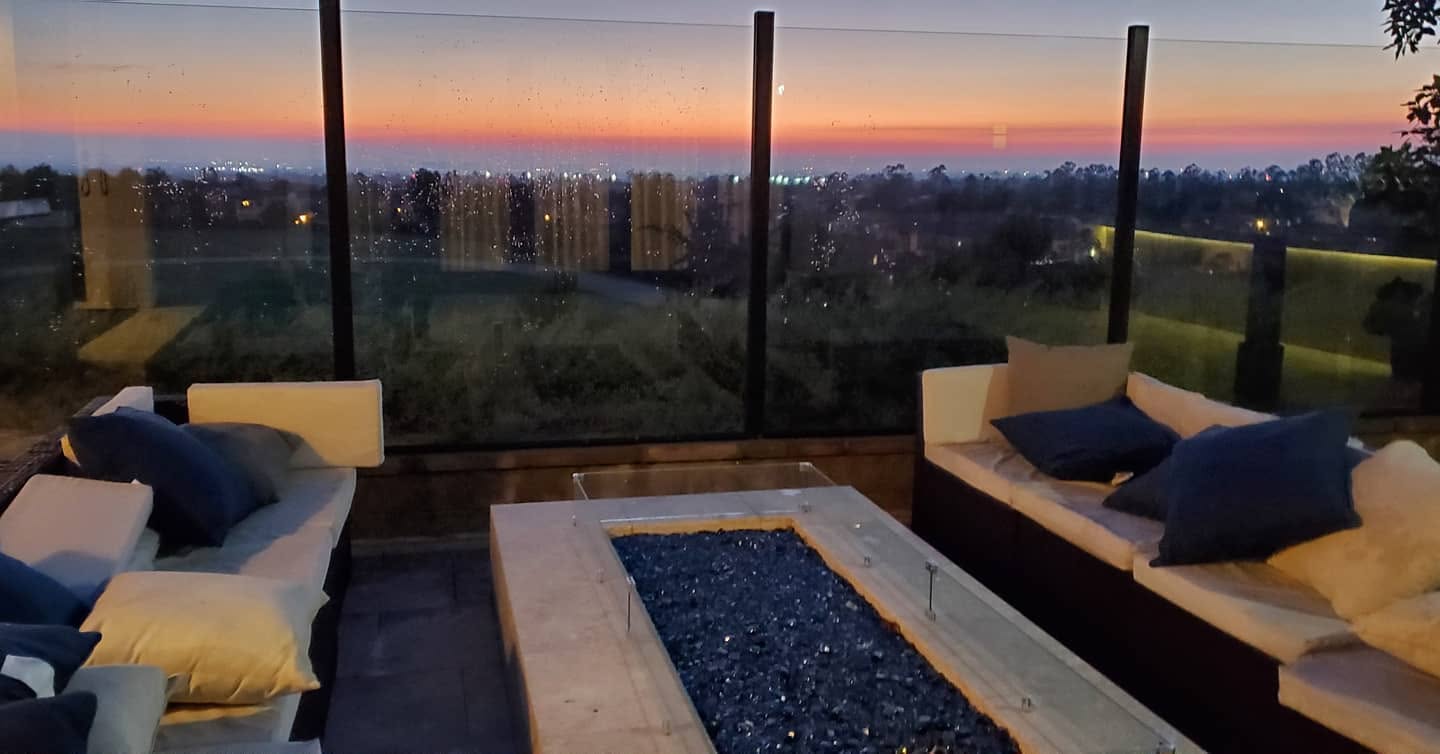
Glass railings are everywhere along the Newport Beach coastline — wrapping ocean-view decks, lining harborfront balconies, framing pool areas, and running the length of commercial patios overlooking the water. They’re also some of the hardest surfaces to keep looking good. A professional glass railing cleaning service deals with a specific combination of salt spray, hard water, fingerprints, and UV exposure that standard glass cleaning routines aren’t built to handle.
This guide covers what that work actually involves, how it differs between residential and commercial properties, and what to look for when choosing a provider in Newport Beach and the surrounding Orange County coastline.
Why a Professional Glass Railing Cleaning Service Matters
Unlike a window set into a wall, glass railings sit fully exposed — angled toward the ocean, low to the ground, and directly in the path of salt air, sprinkler overspray, and hand contact from anyone who leans against them. That exposure adds up fast. Salt residue etches into glass surfaces over time if it isn’t removed regularly, leaving a permanent haze that no amount of cleaning can later reverse. Hard water spots from irrigation systems bake into the glass under direct sun, and fingerprints and smudges on pool-deck or patio railings accumulate daily rather than seasonally.
Glass railings also involve more edges, brackets, and hardware than a typical window. Stainless steel posts, standoff hardware, and base channels all collect grime and salt buildup, and a rinse-and-wipe approach leaves residue in the joints where it’s easiest to see. A dedicated provider accounts for all of it — the glass itself, the metal hardware, and the base track where debris tends to collect.
Neglect has a cost beyond appearance. Salt and moisture trapped against stainless steel hardware over months or years can accelerate pitting and corrosion, especially where posts meet decking or concrete. What starts as a cosmetic issue on the glass can turn into a structural one on the hardware if buildup around brackets and base channels goes unaddressed long enough. Regular cleaning catches early signs of wear — a loosening bracket, a hairline crack, or early rust bloom — before they become a repair bill.
Residential Glass Railing Cleaning in Newport Beach
Homeowners in Newport Coast, Corona del Mar, and Balboa Island increasingly use glass railings on decks, staircases, pool enclosures, and view balconies specifically because they preserve sightlines to the ocean or harbor. That design choice comes with upkeep. Professional cleaning for a private home typically covers pool fencing, deck and balcony railings, interior staircase glass, and any glass barriers around a spa or outdoor kitchen.
Residential work tends to prioritize a few things that matter more in a home setting than a commercial one. First, product safety: railings near a pool or spa need cleaning solutions that won’t affect water chemistry or leave residue that transfers onto swimwear and skin. Second, scheduling flexibility: many homeowners prefer service coordinated around pool parties, holidays, or open houses rather than a fixed monthly date. Third, attention to hardware finish: high-end homes often use brushed nickel, black stainless, or custom-finished posts and brackets, and a careless cleaner can dull or scratch a finish that’s expensive to replace.
Frequency for a residential glass railing cleaning service usually depends on proximity to the water. Beachfront and immediate coastal properties often benefit from monthly visits, while homes a few blocks inland can typically stretch to a bimonthly or quarterly schedule without noticeable buildup. Homes with pools tend to need more frequent hardware attention regardless of distance from the ocean, since chlorine and pool chemicals interact with glass and metal differently than salt air alone.
Commercial Glass Railing Cleaning in Newport Beach
Commercial properties present a different set of priorities. Restaurants and bars with ocean-view patios, hotels with balcony railings, office buildings with lobby or rooftop glass, and HOA-managed common areas all rely on glass railings that hundreds of people touch, lean on, and photograph every week. For these properties, appearance is tied directly to revenue and reputation, which changes how the work gets scheduled and delivered.
A commercial glass railing cleaning service typically operates on a recurring contract rather than a one-off basis — weekly for high-traffic restaurant patios, biweekly for hotel balconies and common areas, and monthly for lower-traffic office or retail settings. Providers serving commercial clients also need to work around business hours, coordinating early-morning or after-close appointments so cleaning doesn’t interrupt service or foot traffic.
Liability and safety documentation matter more on the commercial side as well. Property managers and business owners should expect a provider to carry adequate general liability insurance and, for any elevated or multi-level railing work, appropriate safety training and equipment. Many commercial contracts also require proof of insurance on file before work begins, along with a point of contact for scheduling around events or peak business periods.
Consistency is the other major difference. A restaurant with a smudged or hazy ocean-view railing during a Saturday dinner rush is a visible problem in a way a slightly dusty railing at a private home isn’t. Commercial clients tend to value a provider who shows up on a predictable schedule and communicates proactively if a visit needs to be rescheduled, rather than one who simply does good work when they show up.
What a Professional Cleaning Visit Includes
Whether the property is residential or commercial, a thorough cleaning visit follows a similar process, adjusted for scale. Technicians typically start by rinsing loose salt, dust, and debris off both the glass and the surrounding hardware, since scrubbing directly into dry salt residue can create fine scratches. From there, a specialized glass cleaning solution is applied and worked across the surface, often with a combination of microfiber and squeegee tools depending on the railing’s size and panel configuration.
Hardware receives separate attention. Posts, standoffs, and base channels are wiped down and, where needed, treated to prevent corrosion — a real concern for coastal metal exposed to salt air year-round. Base tracks and channels, which tend to collect sand, leaves, and standing water, are cleared and dried to prevent buildup between visits.
A final inspection typically closes out the appointment, checking for streaking, missed spots near edges and brackets, and any hardware that looks like it needs attention beyond routine cleaning — a loose bracket or early corrosion, for example, that a homeowner or property manager would want to know about before it becomes a bigger repair.
How Often Glass Railings Should Be Cleaned
Frequency comes down to exposure and traffic. Properties directly on the water — whether a beachfront home or an oceanview restaurant patio — see the fastest buildup and typically need cleaning every two to four weeks to stay ahead of salt film and water spotting. Properties set back from the immediate coastline, or interior commercial spaces like lobby railings, can often go six to eight weeks between visits.
High-touch surfaces need more frequent attention regardless of location. A stair railing or pool fence that gets handled constantly builds up fingerprints and smudges faster than a fixed decorative panel, even if both are cleaned by the same crew on the same schedule. A good provider will assess touch points and adjust recommendations rather than applying one blanket frequency to every railing on a property.
Choosing the Right Provider
Not every glass cleaning company is equipped to handle railings the way they handle standard windows. When evaluating a glass railing cleaning service, ask specifically about experience with the hardware types common in Newport Beach — stainless steel posts, glass clamp systems, and frameless panel railings — since technique and product choice differ from cleaning a flat window pane.
Ask about insurance, especially for commercial properties or any residential railing situated above ground level. Confirm whether the company uses products safe for use near pools and spas if that applies to your property. And ask how they handle hardware, not just glass — a provider who only addresses the glass panels and ignores posts, brackets, and base tracks is doing half the job.
Finally, ask about scheduling flexibility and communication. Coastal properties deal with unpredictable conditions — a Santa Ana wind event or an unexpected marine layer can change what a railing needs on short notice — and a provider willing to adjust rather than stick rigidly to a preset calendar tends to deliver better long-term results.
Cost Factors to Expect
Pricing for railing cleaning varies more than pricing for standard windows, since it depends on linear footage of railing, the amount of hardware involved, and accessibility. A single ground-level residential pool fence costs far less to maintain than a multi-story commercial patio system with dozens of posts and panels spanning an elevated deck.
Recurring contracts, common on the commercial side, typically bring the per-visit cost down compared to one-off appointments, since the provider can plan routes and staffing around a predictable schedule. Residential clients who commit to a recurring plan often see similar savings compared to booking one-time cleanings whenever buildup becomes noticeable.
Other variables include hardware condition — heavily corroded or neglected posts take longer to clean than well-maintained ones — and whether pool-safe or specialty products are required. Most providers offer a free on-site estimate after walking the property, which is the most reliable way to get an accurate number rather than relying on a general per-panel rate quoted over the phone.
Frequently Asked Questions
Glass railings sit at a different angle and height than windows, are handled directly by people, and include metal hardware — posts, standoffs, and base tracks — that windows don’t have. A glass railing cleaning service accounts for salt buildup low to the ground, fingerprints from regular contact, and corrosion risk on hardware, all of which require different techniques than standard window cleaning.
Beachfront and immediate coastal homes typically benefit from monthly cleaning due to salt air and marine layer exposure. Homes set back from the water can often go bimonthly or quarterly. Pool-adjacent railings may need more frequent hardware attention because of chlorine exposure in addition to salt.
High-traffic properties like restaurant patios and hotel balconies typically need weekly or biweekly service to stay presentable for guests. Lower-traffic commercial settings, such as office lobbies or retail common areas, often do well on a monthly schedule.
Reputable providers use products and techniques suited to the specific hardware finish — brushed nickel, black stainless, or standard stainless steel — since the wrong product can dull or discolor a finish. Ask any provider directly what they use on metal hardware, not just glass.
Yes. Railings near pools or spas need products that won’t affect water chemistry or leave residue that transfers onto skin or swimwear. A qualified provider will use pool-safe products for these areas as standard practice.
Not always. Some general window cleaning providers don’t include railing hardware, base tracks, or pool-safe product use in a standard package. It’s worth confirming exactly what’s included before booking, especially for commercial contracts that specify recurring service.
Most property managers and business owners should request proof of general liability insurance before any work begins, particularly for elevated railings or high-traffic public areas. This protects the property in the event of an accident during service.
Whether it’s a single staircase railing at a Corona del Mar home or a full patio system at an oceanfront restaurant, a properly maintained glass railing cleaning service keeps Newport Beach’s signature ocean views clear, protects hardware from coastal corrosion, and preserves an investment that’s meant to be looked through, not at.