
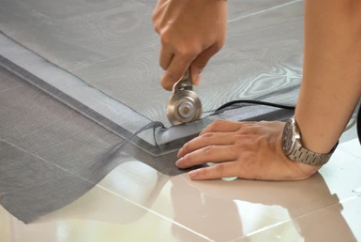
OCD Windows repairs and replaces window screens for homes and businesses across Orange County and the Inland Empire. Screens are the kind of thing people rarely think about, tucked behind the glass and out of the spotlight, until something is obviously wrong. Usually it’s a rip you can spot from the curb, or a screen that won’t sit flat in the frame anymore. By then, it typically hasn’t “just happened”, it’s been wearing out in the background for a while. OCD Windows takes on everything from one-off screen fixes to full-property screen replacement, using your existing frames when possible or taking fresh measurements when the old screen no longer fits the opening.
What a Screen Really Does for a Property
A screen’s job sounds simple: keep unwanted stuff out while letting fresh air in. When it’s doing that well, it disappears into the background. Once it isn’t, you start noticing problems that don’t always get blamed on the screen.
From the street, curb appeal is the giveaway. A sagging screen, a bent frame, or a visible tear reads like “this place isn’t maintained”, even when the rest of the home looks great. It’s minor, but it catches the eye because it doesn’t match everything else. Swapping out a few beat-up screens is also one of the cheaper ways to tighten up the look of a home, especially before a sale or appraisal, or if the screens have been visibly declining for the last summer or two.
Day to day, the practical side matters more. A screen in good shape helps stop dust, pollen, and wind-blown debris from drifting inside every time you open a window. Once the mesh has gaps or tears, that filter effect drops fast. The result shows up on windowsills and floors, then later in HVAC filters. If you’re the type to keep windows open a lot, especially farther inland where it’s drier, you usually notice it first as indoor dust that feels out of proportion even with regular cleaning. A working screen reduces that burden before it ever becomes an indoor issue.
Bugs are similar. One small tear is enough to ruin the barrier exactly where the opening is. It doesn’t take much, that tiny gap can be all insects need. People sometimes expect “overall improvement” after replacing screens and then realize how specific the problem was: one damaged screen on one window can account for most of what felt like a house-wide issue.
How Long Window Screens Usually Last
Most screens land somewhere in the 10-to-20-year range, but the real lifespan depends on mesh type and how much sun and weather a given window takes. Standard fiberglass, the most common residential mesh, often makes it about 10 to 15 years in typical conditions. Aluminum mesh can run longer, commonly 10 to 20 years, and in spots with limited direct sunlight it can stretch beyond 30. Higher-end polyester mesh designed for tear resistance and UV stability often reaches 15 to 30 years (RiteScreen).
Some things shorten that life no matter what you buy. South- and west-facing windows get hammered by sun and usually show UV breakdown first, the mesh loses tension and turns brittle before a clean tear ever appears. Pets are the other predictable culprit. Screens on doors or low windows that a dog or cat paws at tend not to survive five years without at least one repair. Coastal locations also bring faster frame corrosion if the aluminum is lower quality, even when the mesh itself is still holding.
Maintenance helps more than people think. A periodic rinse to clear off grit, avoiding blasting the mesh with a pressure washer, and fixing small tears before they spread can add another 5 to 10 years to usable life (Window Screen Guys). Ignore a small tear, though, and it usually grows, mesh under tension doesn’t “freeze” a rip the way solid material can. One loose thread turns into a noticeable gap quicker than most homeowners expect.
What Screens Cost at Retail
Retail screen pricing swings based on size, mesh, and whether you’re buying a stock screen or ordering one built to your measurements. Across the U.S., homeowners commonly pay about $147 to $515 per screen, averaging near $317, based on recent cost data (Angi, HomeGuide). Standard sizes tend to sit on the lower end, often around $100 to $350 per window installed. If you’re stepping up materials or you need custom fabrication, it usually runs $150 to $500 per window. Specialty choices like solar screens, pet-resistant mesh, or pollen-filtering mesh can drive the price much higher, sometimes toward $1,000+ per screen depending on size and material (HomeGuide, Countbricks).
Labor is separate when the job isn’t just swapping an identical frame. Professional installation often comes in around $50 to $80 per hour, while mesh and framing materials generally run $0.25 to $2.50 per square foot depending on what you pick (HomeGuide). If several screens on one property need attention, the per-screen cost usually drops somewhat because measuring, cutting, and fitting multiple units in one visit is simply more efficient than multiple one-off trips.
Big-box screens can look cheaper on the shelf, but there’s a catch. Pre-cut, standard-size screens only work when a window happens to match those dimensions. Once the opening is non-standard, those retail options stop being practical, and custom fabrication becomes the real path forward.
Custom Screen Sizes: Not Common on Shelves, Easy Enough to Order
Custom sizes come up all the time, especially on older homes, builder-specific window lines, or houses that had window replacements without new screens ordered alongside them. Hardware stores generally carry a narrow set of standard sizes and usually don’t provide true on-site custom fabrication beyond basic frame cutting. That’s why homeowners hunting for an odd-sized screen often strike out at a typical retail counter.
Custom sizing itself isn’t the hard part, you just need the right source. Screens built to order are typically made to about a 1/16-inch tolerance and can be produced in almost any dimension, frame color, and mesh type a window needs (Quality Window Screen). Costs usually range from about $70 to $1,000 depending on size and material. A smaller made-to-order fiberglass screen often ends up around $100 to $250 installed, while a mid-size screen, something like 36 by 42 inches, tends to fall between $120 and $350 installed (HomeGuide, Today’s Homeowner). Odd dimensions, specialty mesh, or premium materials push you toward the top of that range.
OCD Windows measures each opening directly instead of trusting manufacturer specs, and that matters more than people assume. Frames can shift a little as a home ages, so a screen built to the original paperwork doesn’t always fit the window you have today. On-site measuring also prevents the classic “it’s off by a quarter inch” problem that turns into a return trip.
Choosing the Right Mesh
Screen mesh isn’t one-size-fits-all, and what you choose affects both price and durability. Standard fiberglass is the usual pick and the least expensive, and for most windows it does the job without drama. Aluminum costs more, but it resists sagging and keeps its shape longer, which can make it a good fit for larger openings or frequently used screens, like sliders. Solar mesh is designed to block some sunlight and heat, so it’s worth considering on west-facing windows that take direct afternoon sun, it helps with glare and interior heat gain while still functioning like a normal screen. Pet-resistant mesh is thicker and tougher than standard fiberglass and is meant for homes where cats or dogs regularly test the screen door or a low window.
None of these options are usually wildly more expensive than standard mesh. The decision tends to come down to where the screen is and what it deals with, more than it comes down to budget.
When to Schedule a Screen Replacement
Screen work isn’t tied to a strict season the way some exterior projects are, but timing still helps. Late winter into early spring is a common window, since that’s when homeowners realize the screens that limped through last summer won’t be good enough once windows start staying open again. Pre-sale prep is another frequent reason, damaged screens are exactly the kind of small defect that shows up in listing photos and stands out during a walkthrough. And after wind or a storm, it’s smart to check sooner rather than later, a screen that’s been knocked loose or torn on one edge often gives out completely well before your next planned maintenance day.
Repair or Replace?
A full replacement isn’t always necessary. Small tears, loose corners, and frames that have drifted slightly out of square can often be fixed on-site, re-tensioning the mesh, securing the corner, straightening the frame, for noticeably less than rebuilding the entire unit. OCD Windows looks at each screen individually instead of defaulting to replacement, because a solid repair is a better outcome than buying something you didn’t need.
Replacement makes more sense when the mesh has actually broken down, brittle, discolored, stretched, or no longer holding its shape. Re-tensioning material that has lost its strength doesn’t last. Frames with corrosion, warping, or a history of repeated patches also usually make better candidates for replacement than for “one more” repair. Most of the time, you can tell on inspection whether the materials still have real life left.
How OCD Windows Handles Screen Service
Screen work starts with an on-site inspection of each affected window. That means looking at the frame, checking the mesh, and taking exact measurements at the window instead of assuming a standard size. After that, OCD Windows provides a written estimate that clearly separates screens that can be repaired from those that actually need replacement, so you’re not paying for new units where a repair would do the same job.
When replacement is the right move, screens are built to the home’s measurements and installed on-site, with frame color and mesh type matched to the rest of the property when appearance matters. If a property has several damaged screens, OCD Windows can handle them in one visit, which typically lowers the cost per screen compared to spreading the work across multiple calls.
If you’re already booking a broader service visit, screen repair or replacement can also be paired with scheduled window cleaning, since both are often evaluated during the same walkthrough. Homeowners commonly bundle them when getting a house ready to sell, cleaning up after storm or wind damage, or catching up on maintenance that’s been put off for a few seasons.
Contact OCD Windows
OCD Windows provides window screen repair and replacement throughout Orange County and the Inland Empire, along with window cleaning, window washing, and related exterior maintenance services. If your screens are torn, missing, or no longer fitting properly, you can contact OCD Windows for an on-site evaluation and a written estimate.